


Many people are familiar with the staples of skin care – cleanser, moisturizer, sunscreen - but they often skip the toner because they don’t understand its purpose. Is it a rinse? A treatment? Something you only need if you have oily skin?
This article explains what a toner does, how to choose one for your skin, and how to apply it correctly so it earns its place in your routine.

What Is a Toner in Skin Care?
A toner is a lightweight, water-based liquid applied after cleansing and before a serum or moisturizer. It removes leftover residue after cleansing, helps the skin return to its slightly acidic pH, and primes the skin so that it absorbs the products that follow more efficiently.
Early toner formulas contained alcohol and astringent botanicals like witch hazel, which stripped oil and visibly tightened pores. This approach often left the skin dry, tight, and more prone to irritation. Today's toners are typically alcohol-free and hydrating, formulated with botanical extracts, humectants, and skin-supporting actives instead of harsh drying agents.
Note: Learn the differences between cleanser and toner and how to use them in the same routine.
Types of Face Toners
Not every toner serves the same purpose. Some hydrate, some gently exfoliate, and some support the skin's microbiome. These categories can overlap. A toner can be hydrating, soothing, and microbiome-supporting at the same time.
Here's a breakdown of the most common categories.
|
Type of Toner |
Best For |
Common Natural Ingredients |
|
Hydrating Toner |
Dry, dehydrated, or normal skin. |
Aloe vera, rose water, glycerin, cucumber extract. |
|
Exfoliating Toner |
Dull, congested, or textured skin. |
Fruit-derived AHAs, willow bark extract, tamarind extract. |
|
Soothing/Calming Toner |
Sensitive, reactive, or redness-prone skin. |
Chamomile, calendula, Centella asiatica (cica), oat extract.
|
|
Clarifying/Balancing Toner |
Oily, combination, or blemish-prone skin. |
Lemongrass, green tea, witch hazel (alcohol-free), tea tree. |
|
Essence-Toner Hybrid |
Most skin types, especially those wanting extra nourishment. |
Fermented botanicals, snail mucin, botanical hydrosols.
|
|
Microbiome-Supporting Toner |
All skin types, especially compromised or barrier-stressed skin. |
Pre/probiotic ferments, aloe vera, botanical extracts.
|
NOTE: Oily skin can still be dehydrated, and dry skin can break out. Pay attention to how your skin behaves rather than sticking rigidly to labels.
What Does a Toner Do for the Face?
When well formulated, a toner does more than just prep the skin. Here's what it offers:
- Removes what the cleanser missed – Even a good cleanser can leave trace oil, minerals from hard water, or residues from sunscreen and makeup. A toner removes what’s left.
- Supports the skin's natural pH – Cleansing, especially with soap-based products, can disrupt the skin’s slightly acidic pH. A toner helps it return to balance.
- Boosts hydration – Toners with humectants like glycerin or hyaluronic acid add a light layer of moisture that helps skin feel less tight after washing.
- Prepares the skin for better absorption – Applying products to slightly damp, toned skin helps serums and moisturizers spread and absorb evenly.
- Calms redness and irritation – Botanical toners with chamomile, aloe, or Centella asiatica soothe reactive skin.
- Refines the appearance of pores – A toner doesn’t shrink pores but clears dirt and oiliness, making them appear smaller.
- Supports the skin barrier and microbiome – Newer formulas with prebiotic, probiotic, and postbiotic ingredients work with the skin's natural bacterial ecosystem instead of disrupting it.
How to Choose a Face Toner?
The best toner is formulated for your skin's needs. Here are tips to help you choose the right product.
Match It to Your Skin Type
Read labels to understand which toner suits your skin type and concerns.
- Dry and dehydrated skin benefits from hydrating formulas with humectants and soothing botanicals.
- Oily or acne-prone skin needs lightweight, clarifying formulas that manage excess oil without over-drying.
- Sensitive or reactive skin does best with fragrance- and alcohol-free formulas formulated with calming botanicals like chamomile or calendula.
- Combination skin likes a balancing toner that hydrates dry areas while keeping the T-zone in check.
Avoid Alcohol and Harsh Astringents
Denatured alcohol (often listed as "alcohol denat.") may feel refreshing at first but dries and irritates the skin with regular use. Check the ingredients, especially if your skin is sensitive or dry.
Look for Barrier- and Microbiome-Friendly Formulas
The skin's microbiome plays a big role in barrier health. Toners with pre-, pro-, and postbiotic ingredients enhance barrier function, contributing to natural healing and protection.
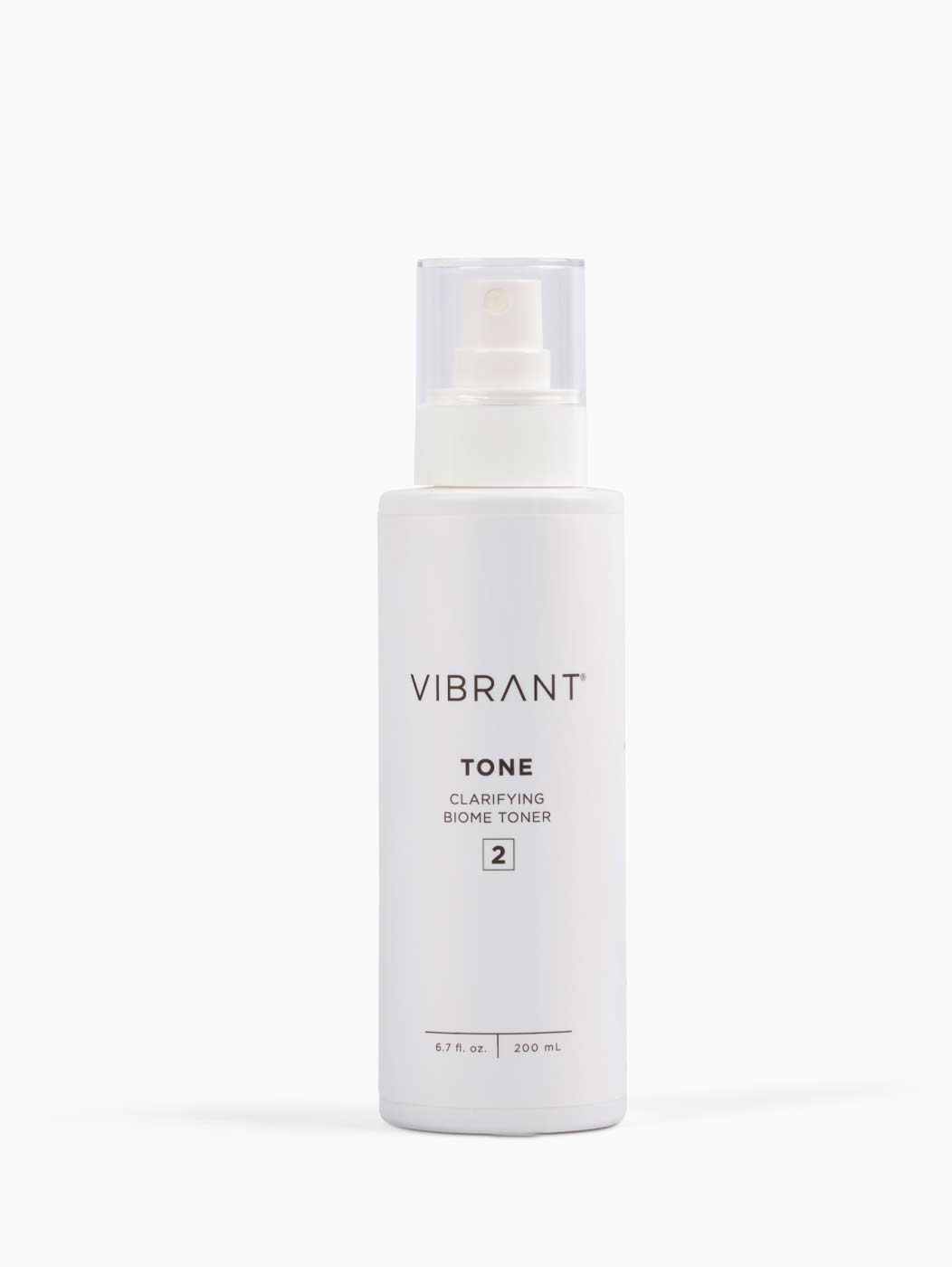
Vibrant TONE Clarifying Biome Toner is built around this philosophy. It combines lemongrass hydrosol, aloe vera, and Centella asiatica with niacinamide, willow bark extract, and pre- and postbiotics to balance the skin after cleansing. It's alcohol-free and designed for normal, oily, and blemish-prone skin. It is suitable for anyone looking to build their routine with a focus on barrier and microbiome support.
How Do You Correctly Apply a Toner?
Toning is usually one of the simplest steps in a routine, but a few small habits make a difference in how well it works.
- Cleanse and pat your face mostly dry.
- Apply toner with a cotton pad or clean hands, pressing gently over the face and neck, avoiding the eye area.
- Let it absorb for a minute before layering the next product.
Do You Put Toner on a Wet or Dry Face?
Many people prefer applying toner on slightly damp skin because it feels more comfortable and helps the product spread evenly. It also helps seal moisture.
How Long Should I Leave the Toner on My Face?
Most toners don't need rinsing. Leaving the product on for 30–60 seconds before applying a serum or moisturizer is usually enough.
Allow exfoliating or acid-based toners to get fully absorbed before applying another product to reduce the chance of irritation.
Should I Use a Toner in the Morning or at Night?
Hydrating and microbiome-supporting toners are usually gentle enough for twice-daily use, morning and evening.
Exfoliating toners, especially those containing alpha-hydroxy acids (AHAs), are better used in the evening because they can increase sun sensitivity. Always follow the label on how to use a specific product.
What Are the Downsides of Using a Toner?
Toners can cause unwanted reactions, especially if overused or not suited to your skin type. Here are some of the problems the wrong kind of toner can cause:
- Alcohol-based or highly astringent toners dry out and irritate the skin.
- Over-exfoliating with acid-based toners, especially when combined with other exfoliants, compromises the skin barrier and causes redness, sensitivity, or breakouts.
- Fragranced formulas can trigger irritation in people with sensitive or reactive skin.
Who Should Not Use Toner?
Some people need to exercise particular caution when choosing a toner and might be better off skipping toner completely.
- People with very dry, compromised, or eczema-prone skin may find even gentle toners irritating or unnecessary.
- Anyone with a rash, active breakout, or skin condition being treated by a dermatologist should check with their provider before adding new products.
- Those using strong actives, like prescription retinoids or high-percentage acid treatments, should be cautious about adding an exfoliating toner to their routine.
- If pregnant or breastfeeding, review with your doctor any toner with acids or essential oils.
Face Toner FAQ
Still have questions about including toner in your routine? Here are answers to the most common ones.
Do You Really Need a Toner?
A well-formulated cleanser and moisturizer cover the basics for many people. However, a toner suited to your skin type adds value: extra hydration, gentle exfoliation, redness relief, and better absorption of the products that follow. A toner is an optional but often worthwhile addition.
Can I Skip a Moisturizer and Just Use a Toner?
No. A toner is a light, fast-absorbing liquid, not a substitute for a moisturizer. Even hydrating toners lack the occlusive, barrier-supporting properties moisturizers provide. Skipping a moisturizer can leave the skin prone to water loss and irritation over time.
Which Is Better for My Skin: A Hydrating Toner or a Lotion?
They're not interchangeable, and most routines benefit from both. A hydrating toner is lightweight and is absorbed quickly, delivering a first dose of moisture right after cleansing. A lotion is thicker and designed to seal that moisture in. Using a hydrating toner before a lotion or moisturizer gives the skin the best of both.
Conclusion
A toner isn't a mandatory step, but it can improve how your skin looks and feels. It removes residue after cleansing, supports your skin's natural pH and microbiome, and preps the skin for serums and moisturizers that follow.
If you're ready to add a toner that supports your skin barrier, Vibrant TONE Clarifying Biome Toner is formulated with that balance in mind.

